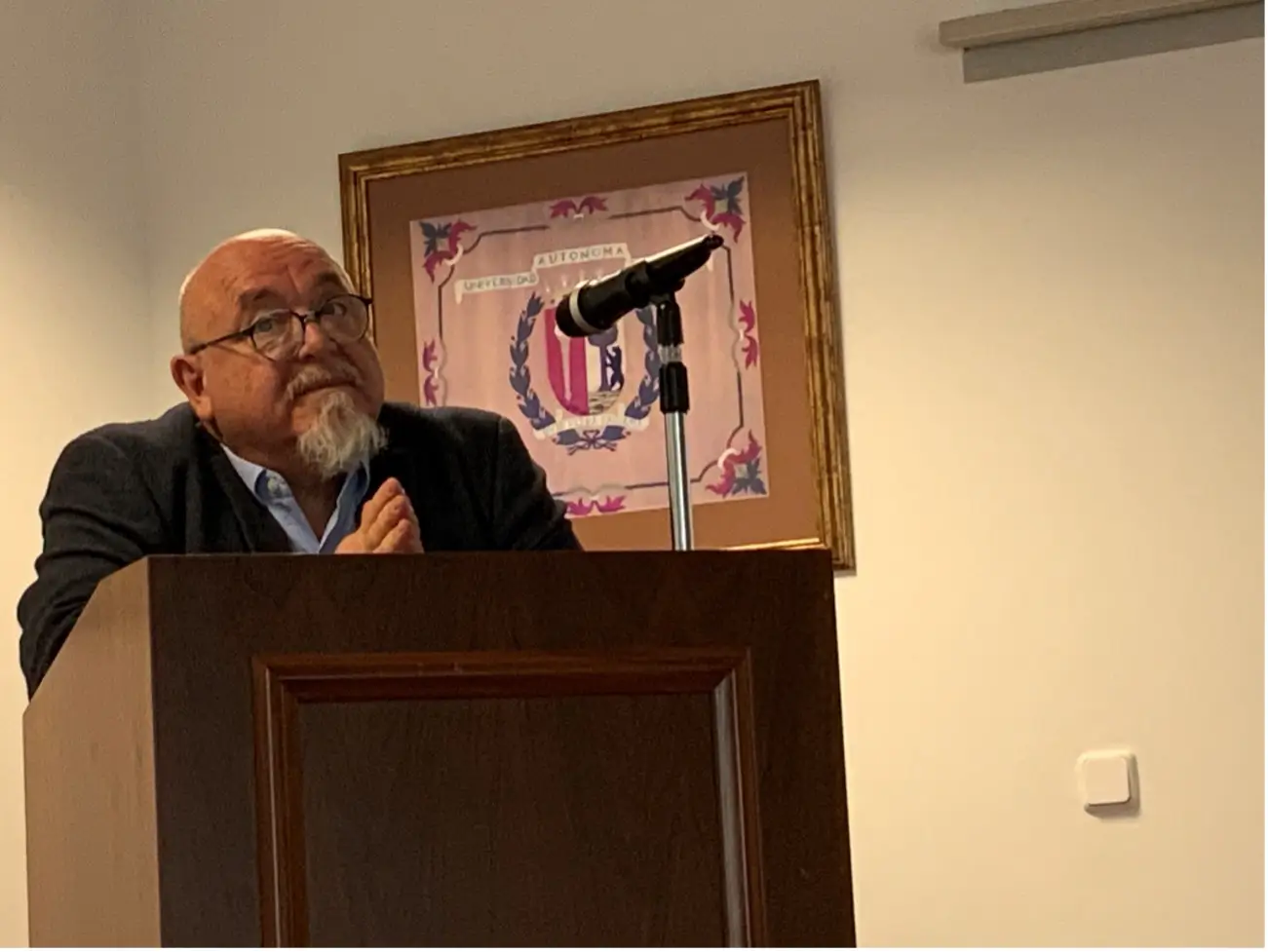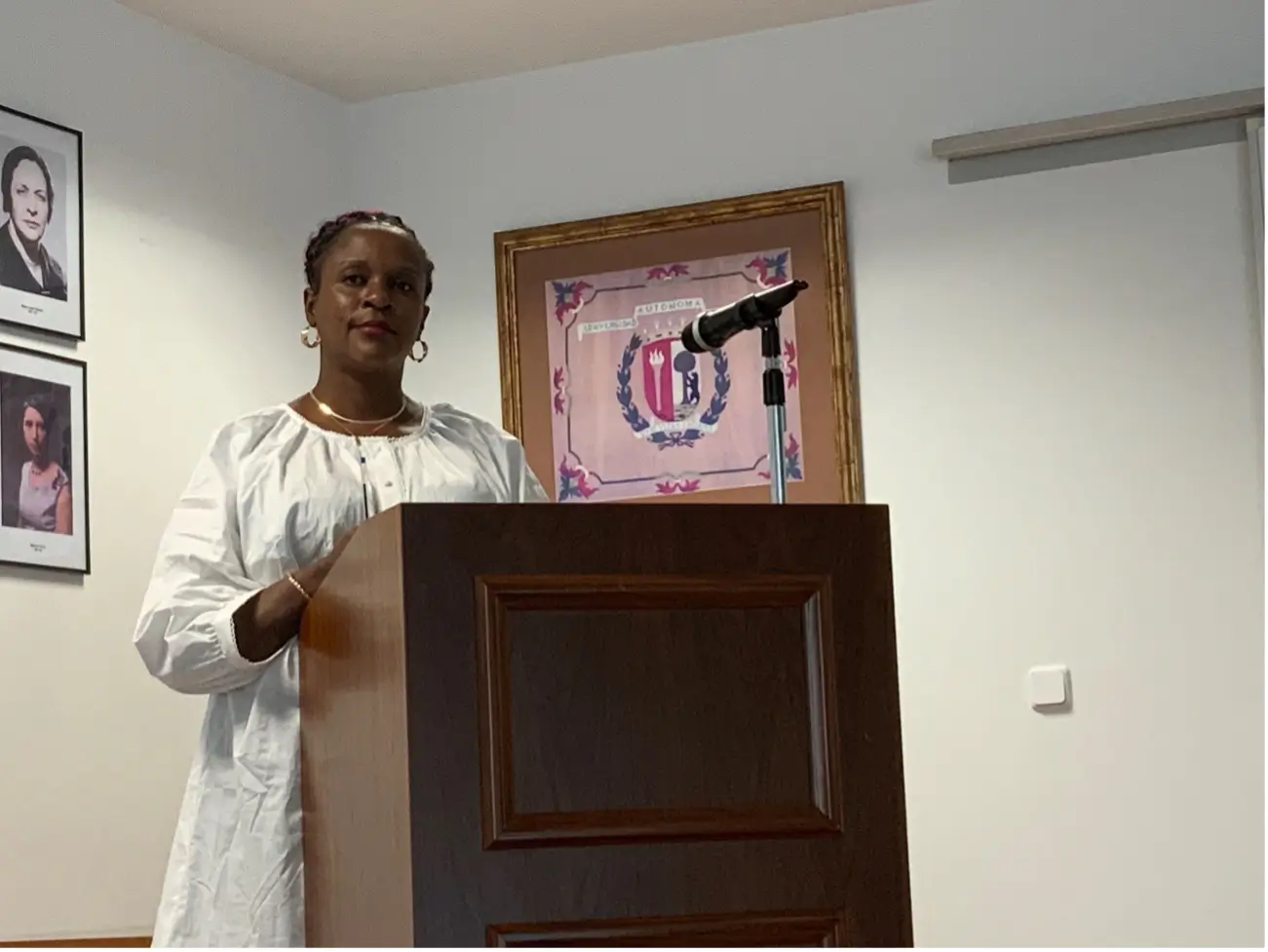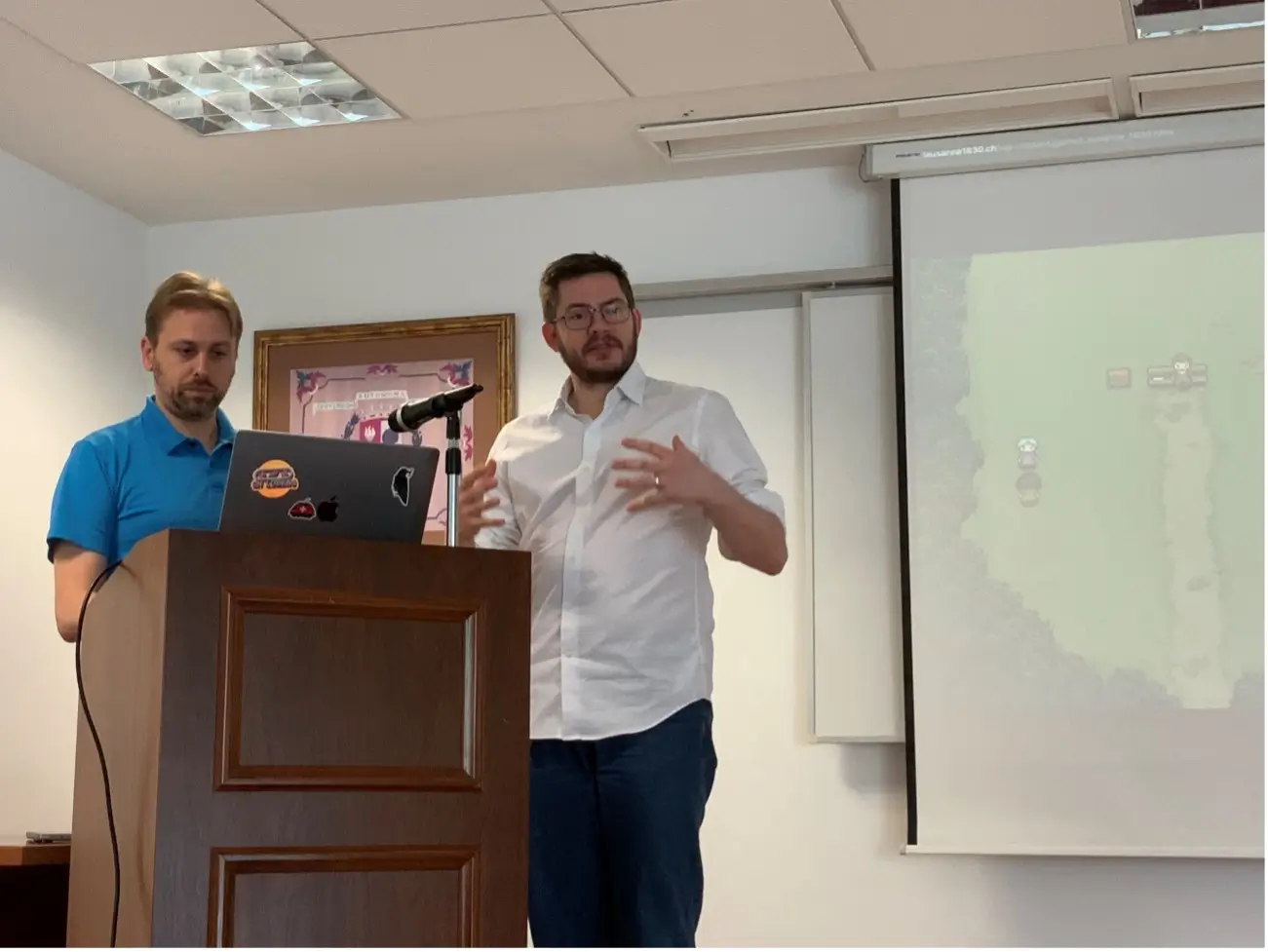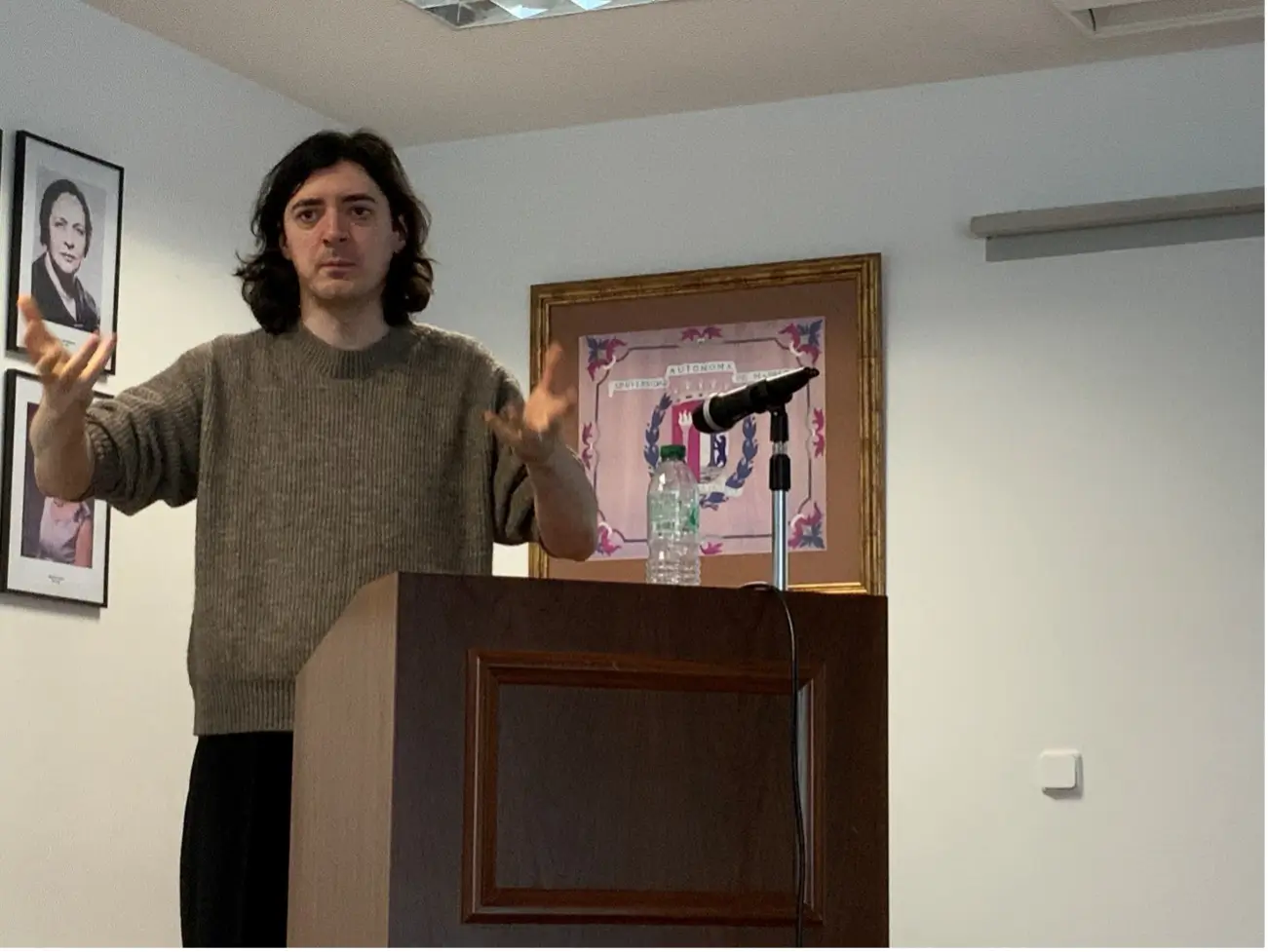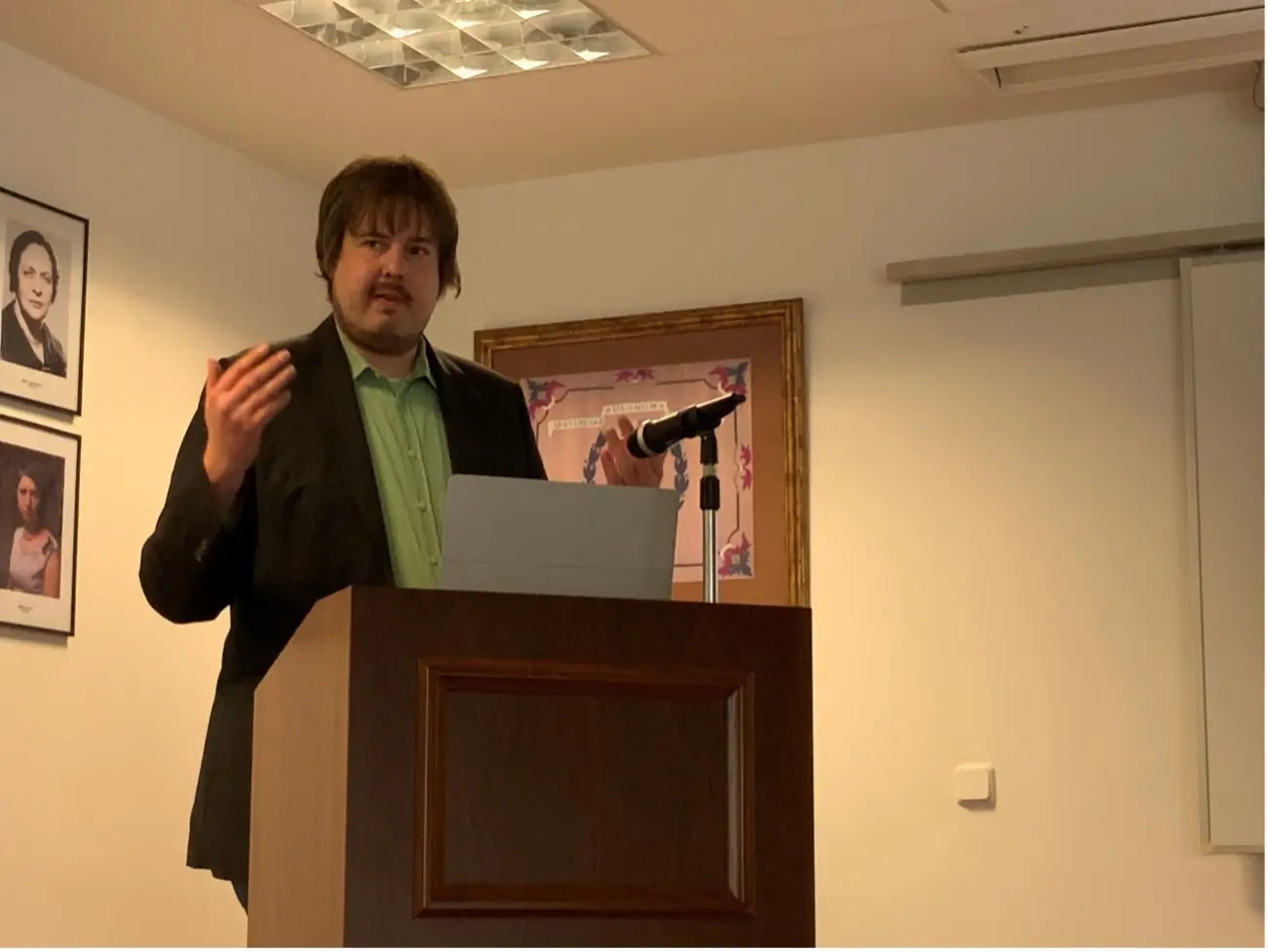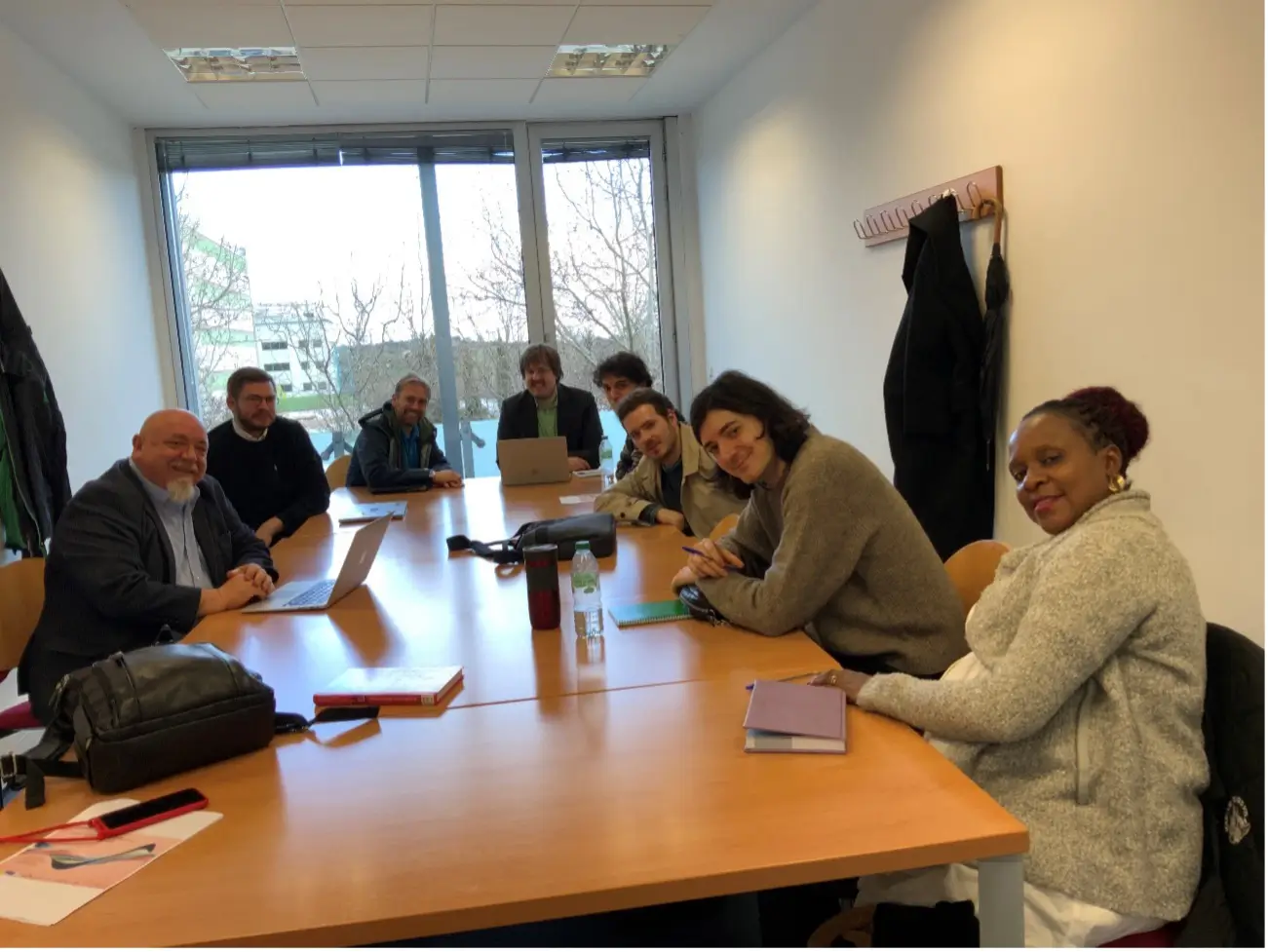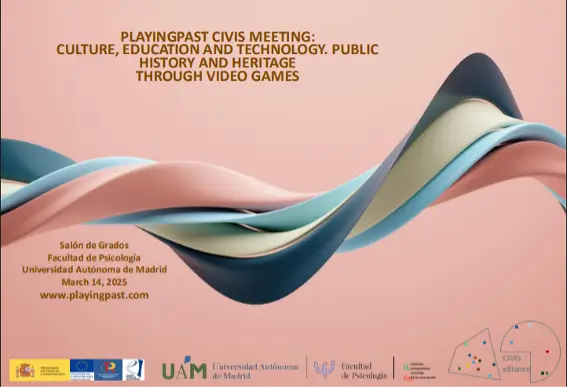
Last Friday, March 14, 2025, a new conference was held in Madrid as part of the international project Playing with the Past. The event took place at the Faculty of Psychology of the Cantoblanco campus of the Universidad Autónoma de Madrid, and brought together specialists from various disciplines and backgrounds to reflect on the use of video games as a pedagogical tool in the processes of teaching and learning history.
The event was made possible thanks to the support of the European University Alliance CIVIS (CIVIS, a European Civic University), a network of eleven leading higher education and research universities in Europe: Aix-Marseille University, the National Kapodistrian University of Athens, the University of Bucharest, the Free University of Brussels, the Autonomous University of Madrid, La Sapienza University of Rome, the University of Stockholm, the Eberhard-Karl University of Tübingen, the University of Glasgow, the Paris Lodron University of Salzburg and the University of Lausanne.
The CIVIS alliance represents a community of more than 470,000 students and 58,000 staff, including 35,000 teachers and researchers. These universities, firmly rooted in their respective regional and urban contexts, actively promote the social, cultural and economic dynamism of their environments. They also defend European values such as inclusion, gender equality, social equity and non-discrimination. CIVIS fosters the co-creation of knowledge and skills through collaboration with citizens, educational centers, businesses and social and cultural organizations. Its global strategy gives a central role to the Mediterranean region and Africa, promoting from 2022 an ambitious agenda of intercontinental cooperation with six African partner universities: Université Hassan II of Casablanca, Université Cheikh Anta Diop of Dakar, University of the Witwatersrand (Johannesburg), Makerere University, Eduardo Mondlane University and University of Sfax.
Almost every participant in this conference belonged to a CIVIS member university, underlining the network’s potential for fostering international academic cooperation initiatives.
As was the case at the conference held in Nicosia a few months earlier, the main focus of the interventions revolved around the potential of video games as powerful educational tools for historical learning, thanks to the multiple possibilities they offer in terms of immersion, storytelling and critical thinking.
The session opened with a keynote speech by Míkel Asensio (UAM), co-director of the Playing with the Past project, who welcomed the participants and stressed the importance of the video game as a space for experiential learning.
The first presentation was by Dorothy Sebbowa, from Makerere University (Uganda), who presented a suggestive essay on the use of video games in the learning of history among future teachers. Her reflection focused on the scarcity of works of fiction -and video games, in particular- that narrate the history of African countries such as Uganda from their own perspective, without the mediation of a Western gaze. This intervention opened a space for critical reflection on the representation of the past in interactive media and the need to promote decolonized narratives.
David Javet and Yannick Rochat, from the Université de Lausanne (Switzerland), then addressed the many scientific and educational challenges posed by the development of educational video games. To illustrate their arguments, they presented Lausanne 1830, a video game designed by their team as a tool for learning the history of the city. The exhibition included a live demonstration of the game, which allowed first-hand observation of its narrative structure, aesthetics and pedagogical potential.
The next speaker was Mario Carretero (FLACSO, UAM), also co-director of the project, who explored the relationship between historical thinking and video games. His presentation defended the role of video games as digital bridges towards a critical understanding of the past, capable of promoting interpretative skills and ethical judgments on complex historical processes.
The session continued with the intervention of David Caballero, editor-in-chief of GameReactor, one of the most important video game magazines in the sector. Caballero gave a comprehensive overview of the current state of the video game industry, highlighting trends, challenges and opportunities in the production of content with educational and historical value.
Afterwards, Andrei Nae (University of Bucharest, Romania) presented a suggestive dissertation on colonialism and ideological consonance (or dissonance) in video game design. His analysis focused on the well-known title Red Dead Redemption 2, addressing how this type of videogame can reproduce or question dominant ideological frameworks, and proposing critical readings from a postcolonial perspective.
The last presentation was by Kevin Korner (Universität Tübingen, Germany), who explored the possibilities of video games in the context of virtual reality applied to the teaching of history. His presentation highlighted the immersive potential of these technologies to foster deeper, more emotional and participatory educational experiences.
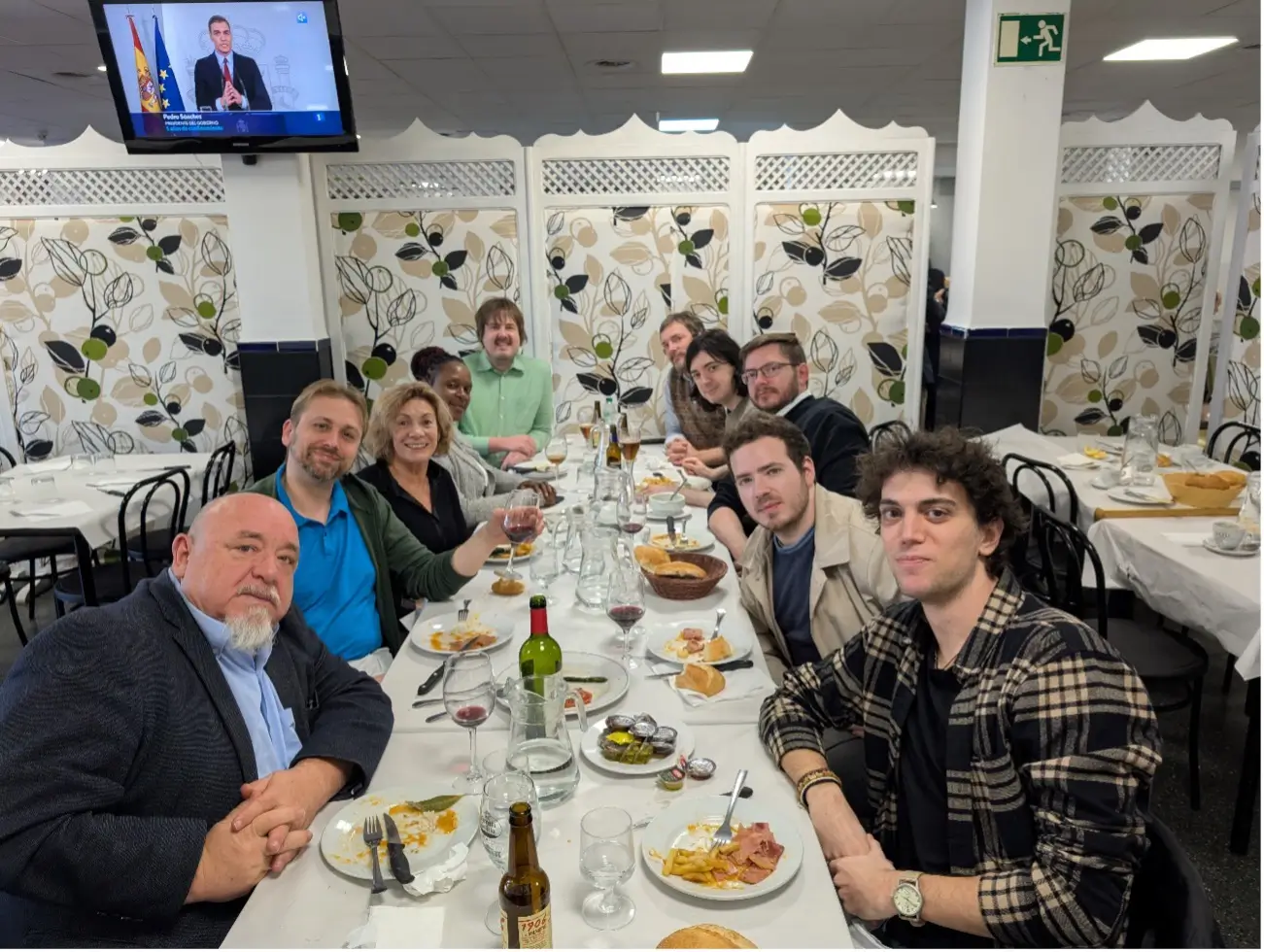
As in the Nicosia meeting, the day was complemented by cultural activities aimed at strengthening ties between participants. The day before the conference and also after its closing, a guided tour of some of the most relevant points of the city of Madrid was organized, accompanied by historical anecdotes and tastings of local gastronomy. These activities provided an unbeatable opportunity to share experiences, strengthen academic networks and create unforgettable memories.
This second conference allows us to complete the panorama initiated with the Cyprus meeting and, with the papers presented at both events, to prepare a book on the state of the art that will be published soon.
We accompany this post with a gallery of images from the event, including several photographs of the speeches and some of the local food.
Videos of the presentations
- Míkel Asensio (UAM): https://youtu.be/U8LRqH7-m9A
- Dorothy Sebbowa (Universidad de Makerere): https://youtu.be/6R9ZPNeTBv4
- Yannick Rochat (Universidad de Lausana): https://youtu.be/K5XTCpLKjYs
- David Javet (Universidad de Lausana): https://youtu.be/TLn66FEJO2U
- Mario Carretero (FLACSO-UAM): https://youtu.be/XASfXAhJe8k
- David Caballero (Gamereactor España): https://youtu.be/1QOO7UoguDU
- Andrei Nae (Universidad de Bucarest): https://youtu.be/TNhXxYCZ6XU
- Kevin Körner (Universidad de Tubinga): https://youtu.be/cNNAJMnG-mA
Photo gallery