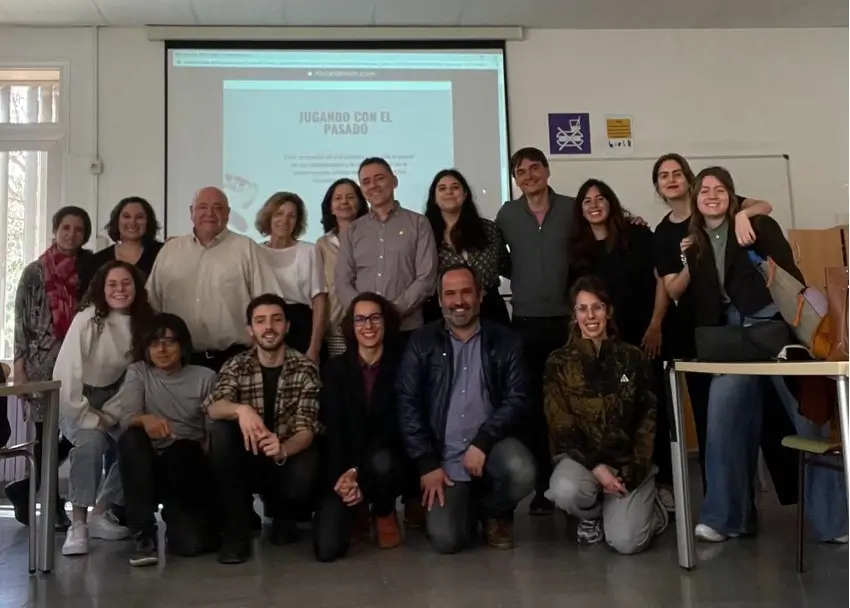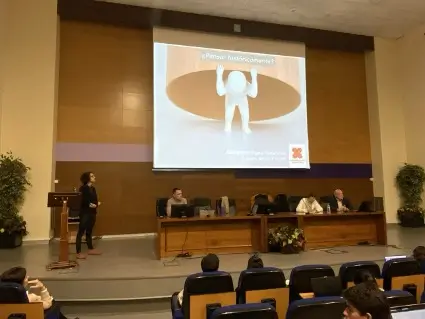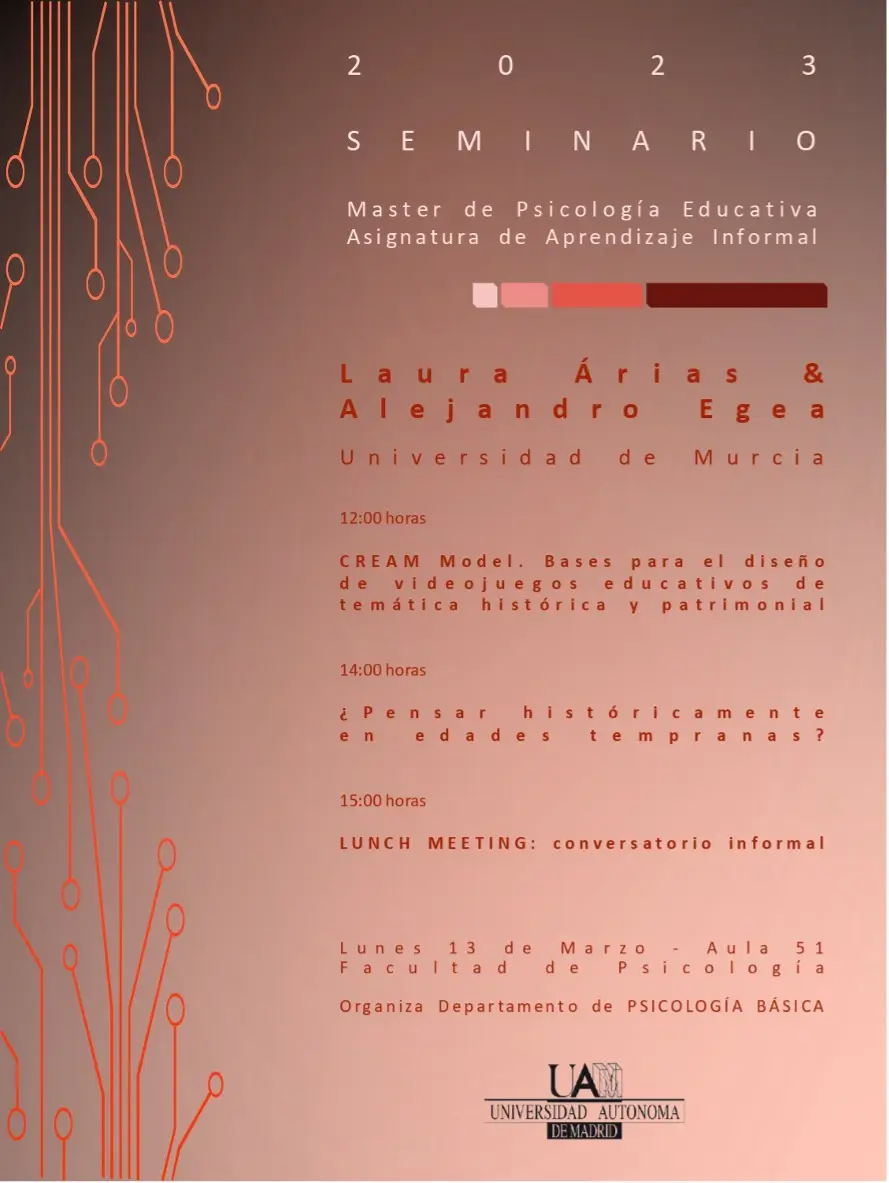
On March 13, 2024, the first colloquium of the Playing with the Past project was held in Madrid, within the Week of Conferences of the Faculty of Psychology of the Universidad Autónoma de Madrid. This inaugural meeting was attended by Laura Arias and Alejandro Egea, professors at the University of Murcia with a solid background in didactics of History and Heritage, as well as in the application of video games and gamification strategies in educational contexts.
The event was structured in three different moments. First, a participatory workshop was held focused on the CREAM model, a proposal for the design of educational video games related to historical and heritage issues. This approach allowed attendees to learn about the theoretical and methodological principles that support the creation of digital materials oriented to historical learning. Secondly, a keynote lecture was given in which a key question was discussed: is it possible for students in the last years of primary education to develop complex historical thinking? This intervention offered a critical overview of the real possibilities and limits of video games as tools to promote advanced cognitive skills in early stages of the educational system.
Finally, the meeting concluded with a lunch-colloquium in which attendees had the opportunity to share impressions in a more relaxed way. This informal space allowed to deepen the issues discussed from a more dialogued perspective, enriching the collective reflection on the pedagogical use of video games.
Throughout their interventions, Arias and Egea shared multiple contributions derived from their research and applied experience. They are very involved in educational innovation, and have managed to land several classroom projects, including the design of educational materials and a video game.
Thus, they analyzed key concepts such as the curricular relevance of the contents present in video games, the potential impact of these tools in the development of historical competencies, and the need to critically review both teaching models and current learning environments.
Likewise, a relevant space was dedicated to the methodological discussion on how to rigorously evaluate the effects of the use of video games in the classroom, highlighting the importance of controlling variables and the need for systematization in the practical application.
Among the main results they have extracted from their research, they emphasized that video games tend to increase students’ interest and motivation for historical content, even generating a subjective perception of learning. However, they warned that these positive effects do not always correspond to a real improvement in the development of historical thinking, as well as in the competencies supposedly involved in its development, since the empirical data show certain inconsistencies, significant gaps and distractions in the contents worked on. In addition, they concluded that, in general terms, the experience with video games does not achieve sufficient significance in three fundamental aspects: exposure time, depth of the activities and contextualization of learning. According to them, the effective development of complex competencies in historical thinking requires longer, deeper and more situated interventions that integrate the use of video games in broader and more structured didactic frameworks.
This first colloquium was, therefore, a valuable initial contact for the Playing with the Past project, opening a space for collective reflection on the potential and limitations of video games as an educational tool in the teaching of history.
We accompany this post with some images of the event and the poster used in its dissemination.