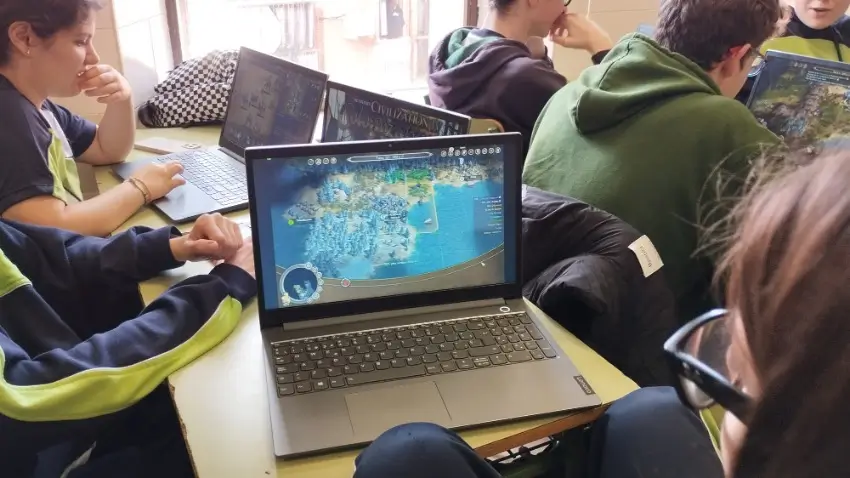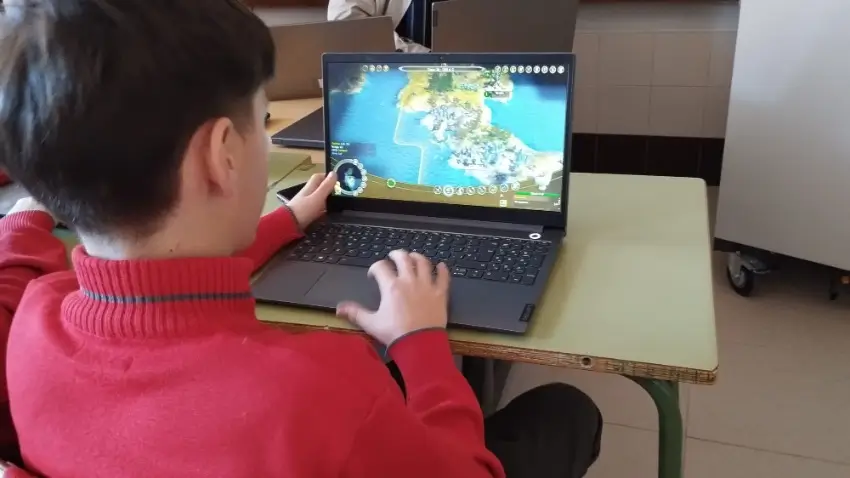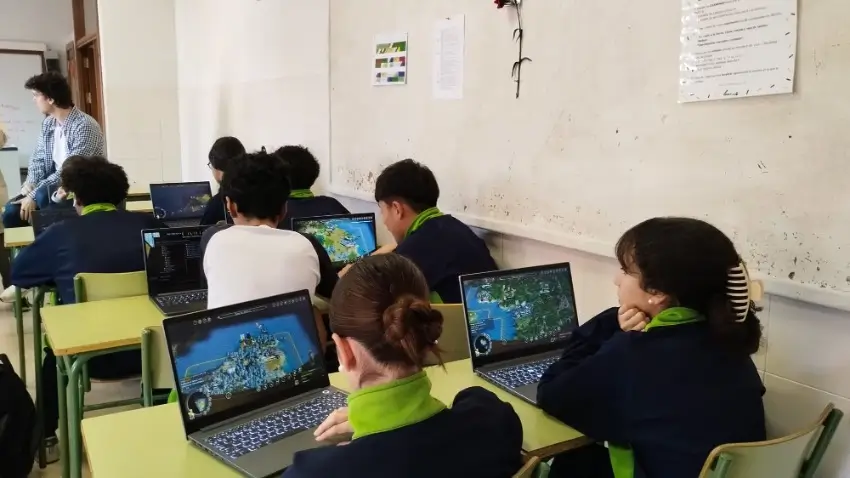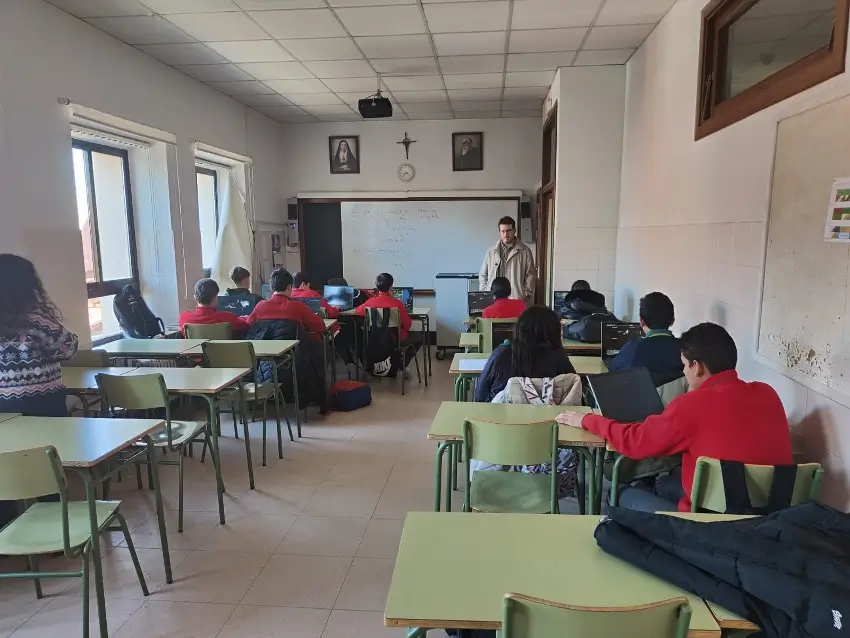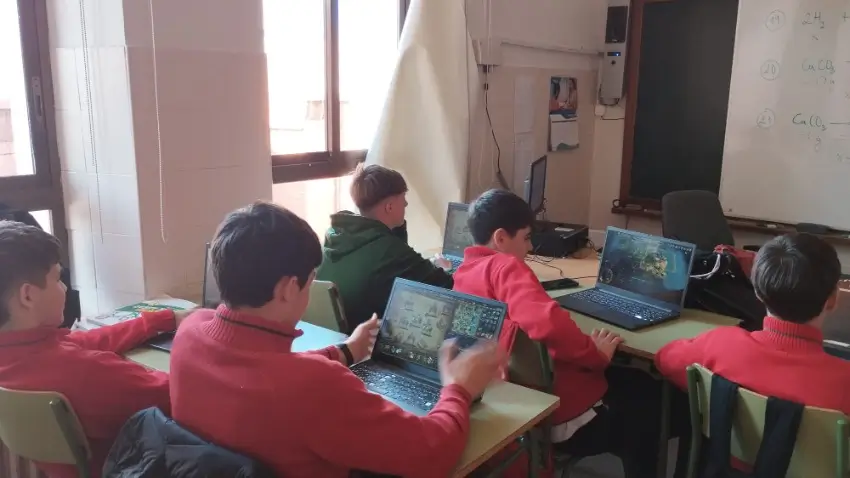
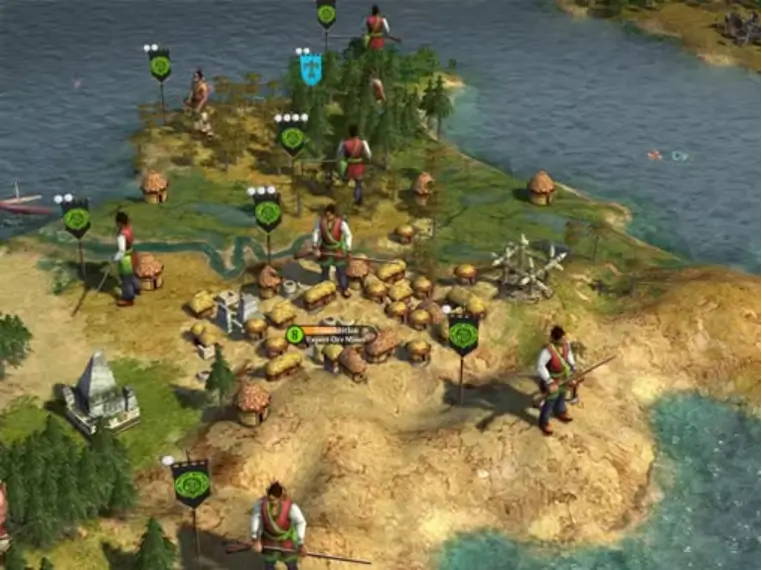
During the month of February 2025, students in the 3rd year of ESO at IES Santa Rita, in Carabanchel, participated in a pioneering study that explored the educational potential of video games in the history classroom. Specifically, the aim was to investigate how a strategy game like Sid Meier’s Civilization IV: Colonization could influence their ideas and understanding of the American colonization process.

The experience was made possible thanks to the collaboration of Vanesa Galán, history teacher and academic coordinator of the center, and was carried out both during school hours and in voluntary extracurricular sessions. In total, each student played the game for about 15 hours spread over three weeks, using the center’s computers set up for the occasion.
During the sessions, the students were accompanied and supervised by Jose Casado, member of the research team, and Miguel Ángel Rivera, video game developer, who were in charge of resolving technical doubts and ensuring that the experience went smoothly, although without intervening directly in the decisions made by the students within the game.
Before and after playing the game, they were given an open-ended questionnaire to find out their ideas about colonization, the role of different historical actors, the impact of economic exchange, the independence of the colonies and other aspects less discussed in class or in the videogame itself, such as the role of women or the environmental consequences.
Rather than looking for conclusive results, the objective was to see if the experience with the video game provoked some kind of change in the way they argued or understood these historical processes. Did they think differently after playing the game? Did they introduce new ideas? Did they nuance their answers?
Although the data are still being analyzed, it appears that the children not only enjoyed the experience, but also valued the game very positively. The playful environment allowed them to explore historical concepts from a different, more active and participatory perspective, which seems to have contributed to more meaningful learning.
At the end of this post we include some pictures of the sessions, where you can see the students playing with Colonization on the school’s laptops.